Federal infrastructure priorities evolve, but resilience remains constant. Across agencies, the focus continues to be on keeping facilities operational, secure, and reliable, no matter the disruption.
Federal facilities must function during extreme weather events, aging system failures, cyber risks, and grid instability. Mission continuity, life safety, and operational readiness are non-negotiable, and they continue to shape how projects are planned, designed, and funded.
Resilience is no longer a “nice to have.” It is a baseline requirement.
How Resilience Is Being Delivered Today
What’s changing isn’t the importance of resilience, it’s the approach.
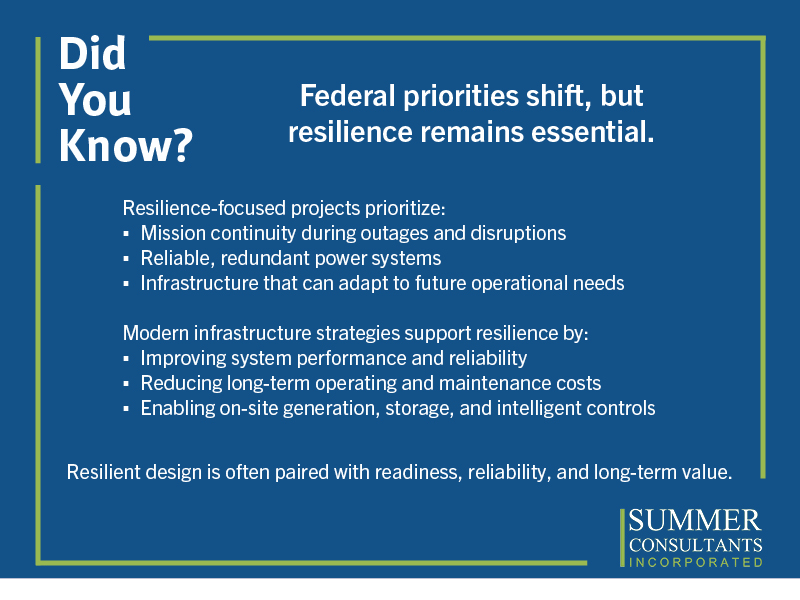
Rather than relying on single-system solutions, agencies are investing in infrastructure strategies that emphasize redundancy, flexibility, and real-time system awareness. These approaches are designed to reduce vulnerabilities while improving day-to-day performance.
Common resilience-driven strategies include:
-
On-site power generation and energy storage to reduce dependence on the utility grid
-
High-performance electrical systems that manage demand more effectively and reduce stress during peak conditions
-
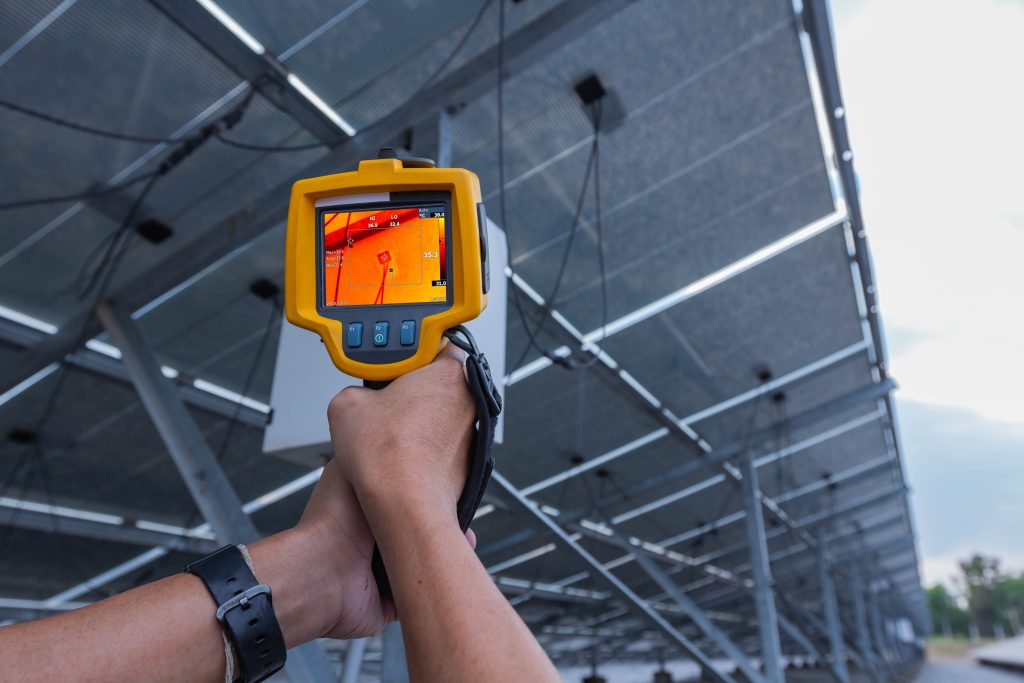
Advanced controls and monitoring that provide visibility and faster response during outages
-
Redundant and hardened distribution systems that eliminate single points of failure
These measures are less about meeting external mandates and more about ensuring facilities can respond, adapt, and recover quickly.
Operational Efficiency Supports Resilience
Resilient infrastructure often performs better across its entire lifecycle. Systems designed for reliability tend to experience fewer failures, reduced downtime, and improved load management.
For federal owners, this translates directly into:
-
Lower operating and maintenance costs
-
Reduced risk of mission disruption
-
Infrastructure that can adapt to evolving operational demands
In an environment where budgets are tight and missions change, long-term performance frequently outweighs initial cost.
Resilience That Delivers Lasting Value
Federal priorities may shift, but the need for resilient infrastructure does not. Projects that emphasize reliability, adaptability, and lifecycle value continue to deliver measurable benefits, regardless of broader policy trends.
At its core, resilience is about preparedness. It’s about keeping facilities online, missions moving forward, and costs predictable over time.